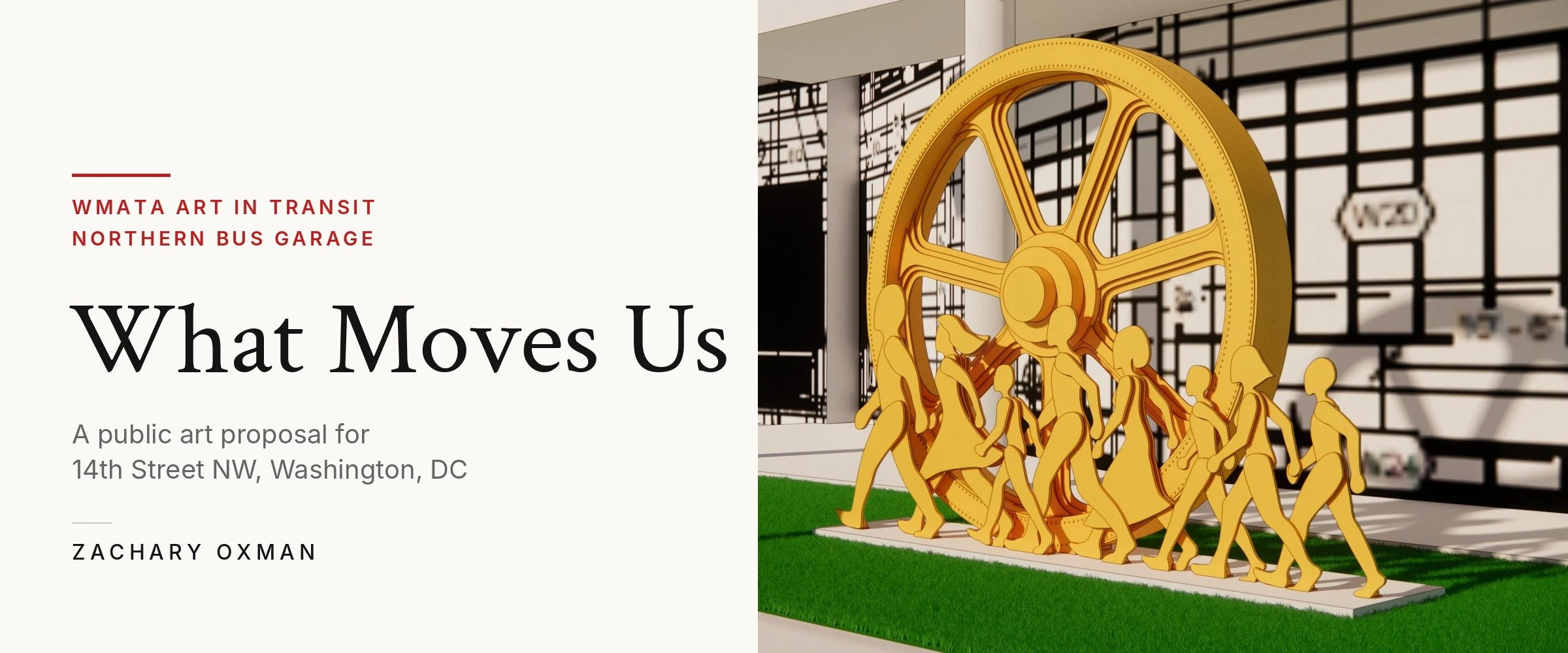
“What Moves Us”
Northern Bus Garage Public Art | Design Narrative, Zachary Oxman
When I first wrote to the panel, I said the long line of motion on this site was what drew me to it: streetcar to bus to electric, more than a century of people moving up and down 14th Street. My design puts that line in front of the new garage as two images. One is the machine that made the corridor possible. The other is the people it carried.
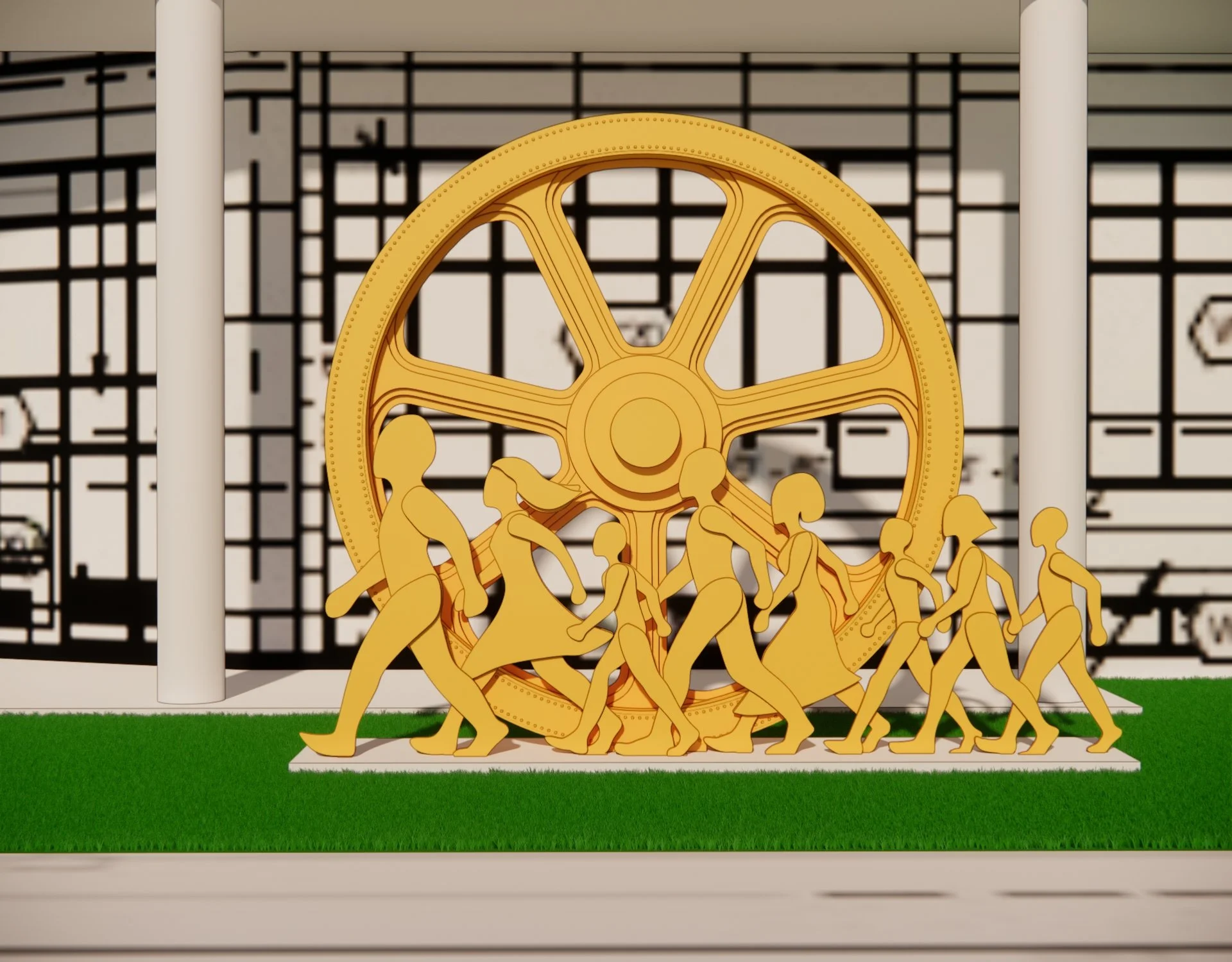
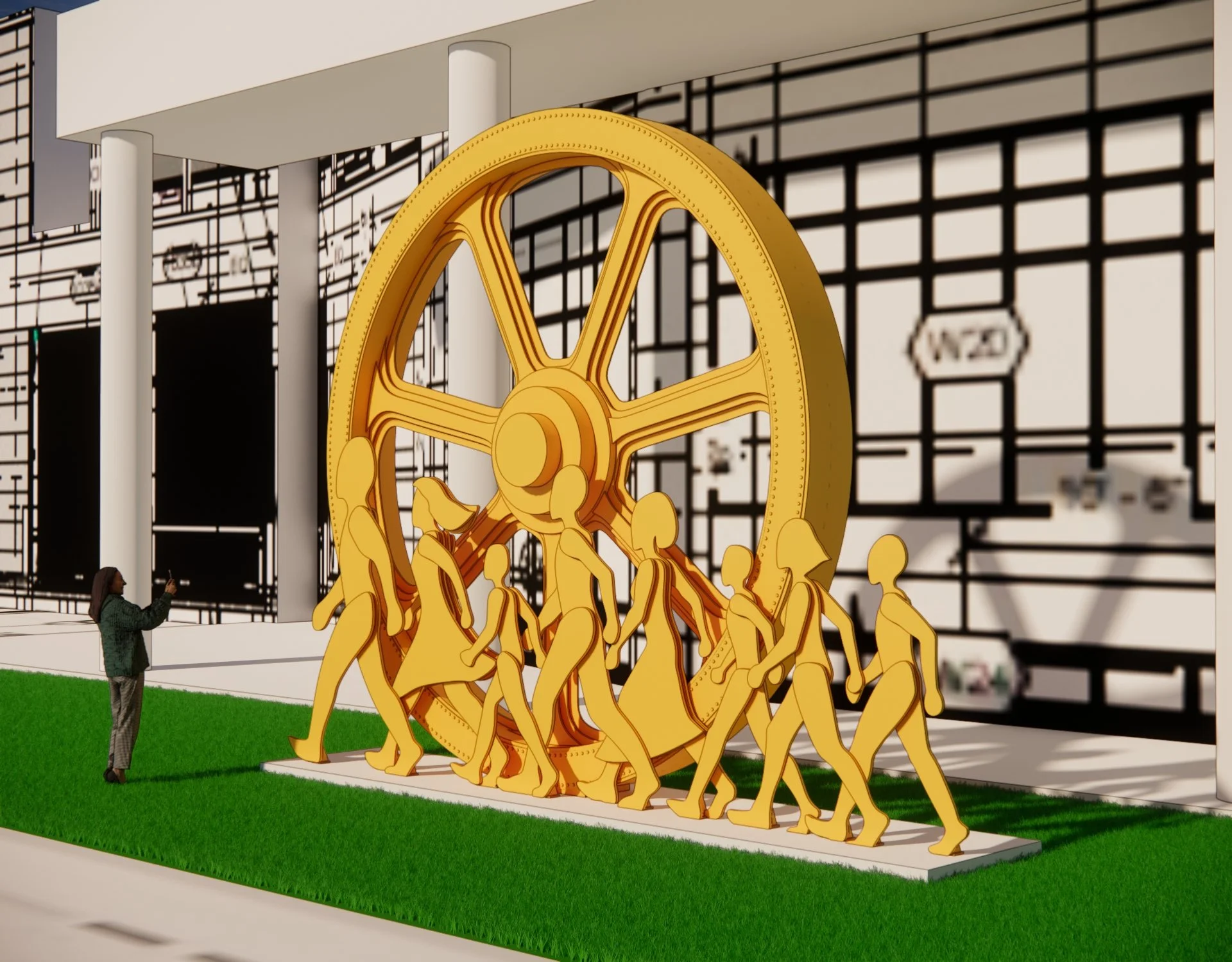
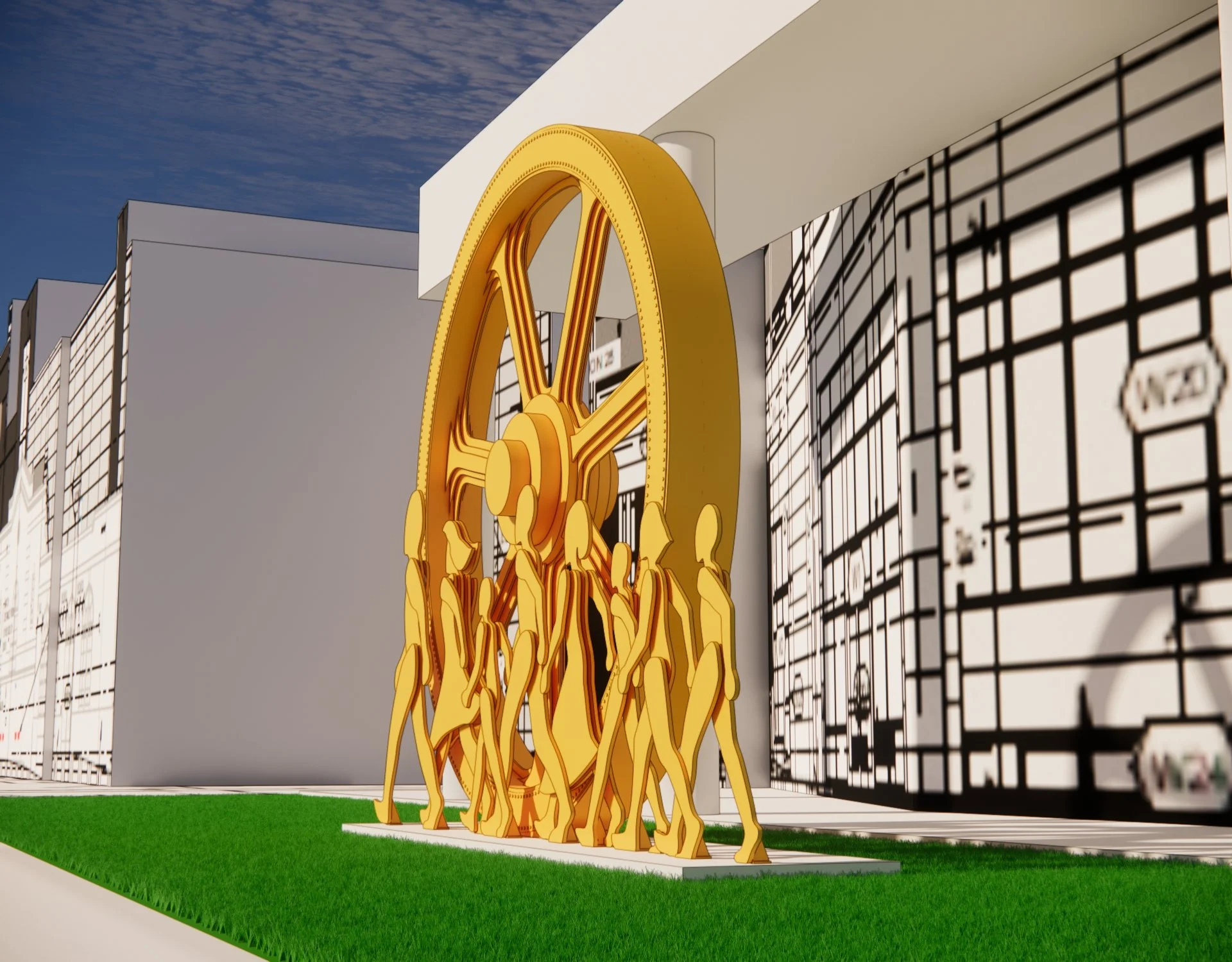
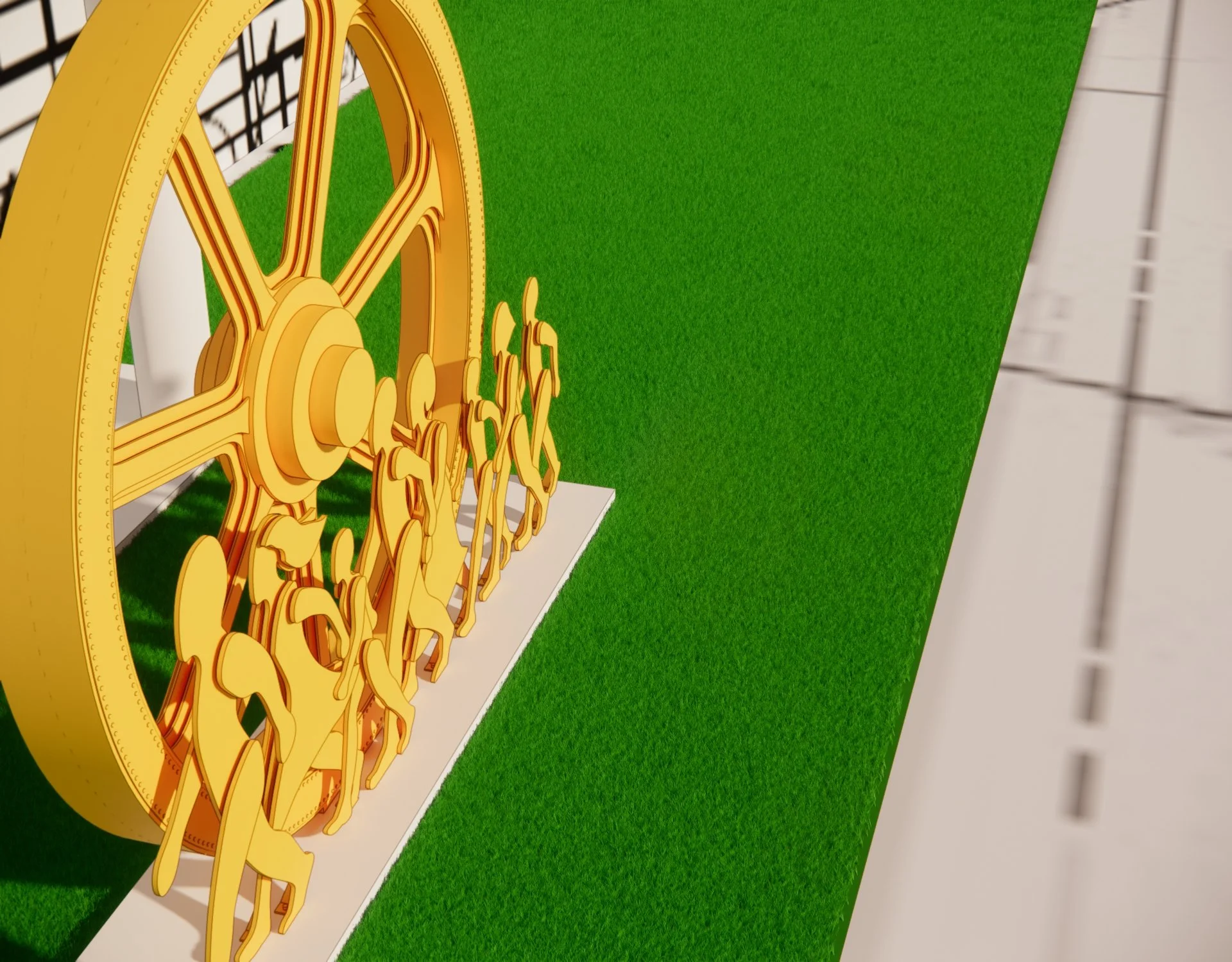
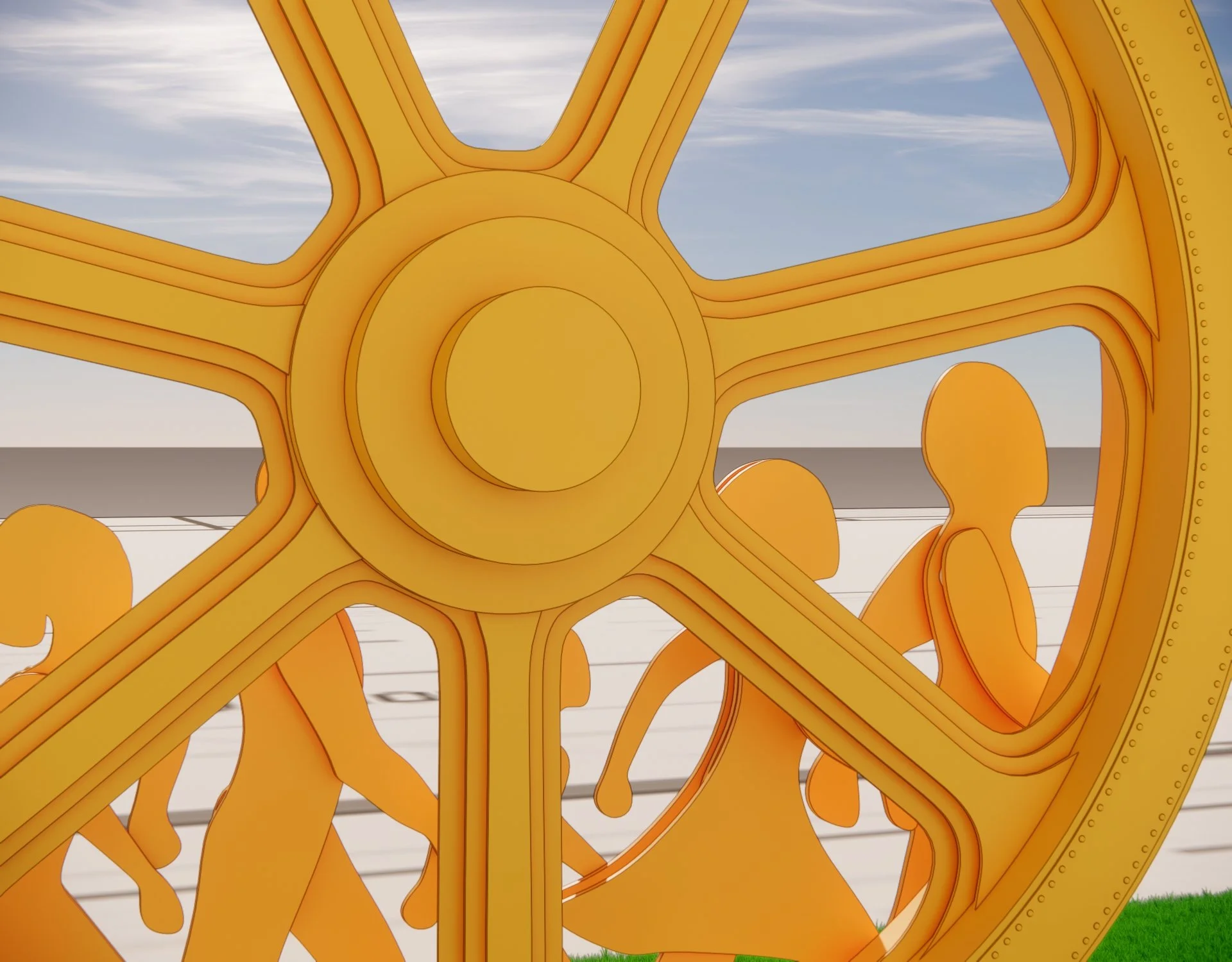
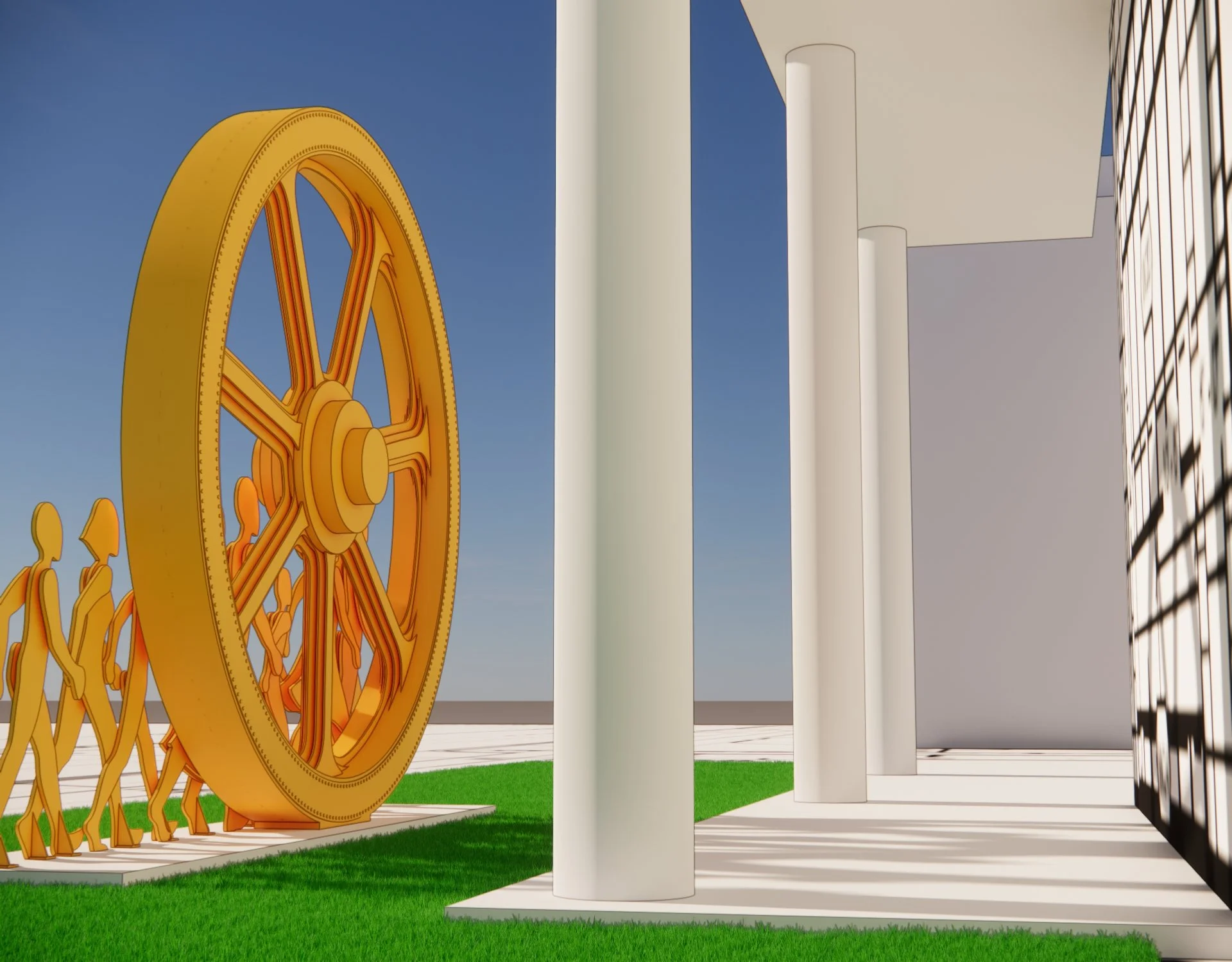
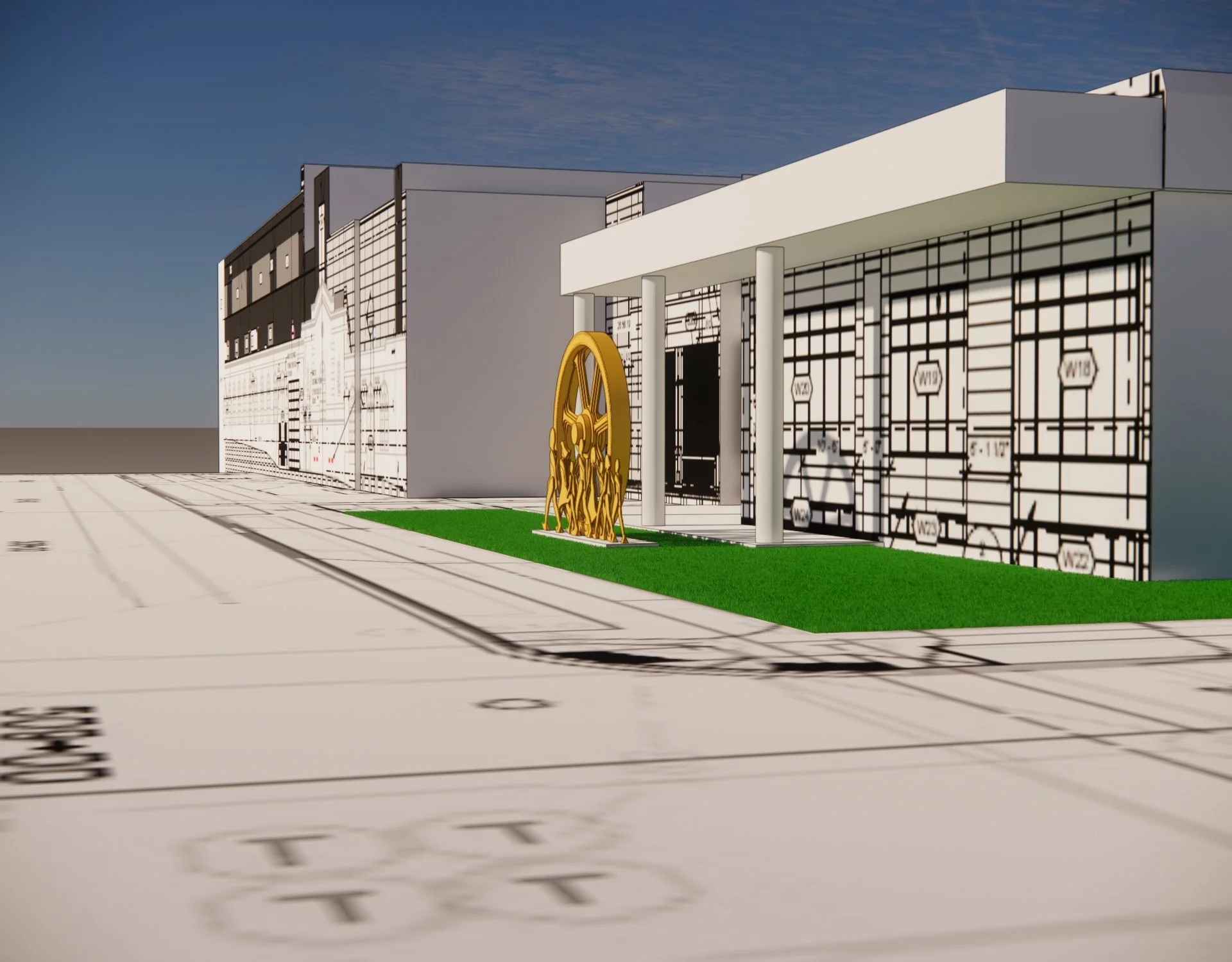
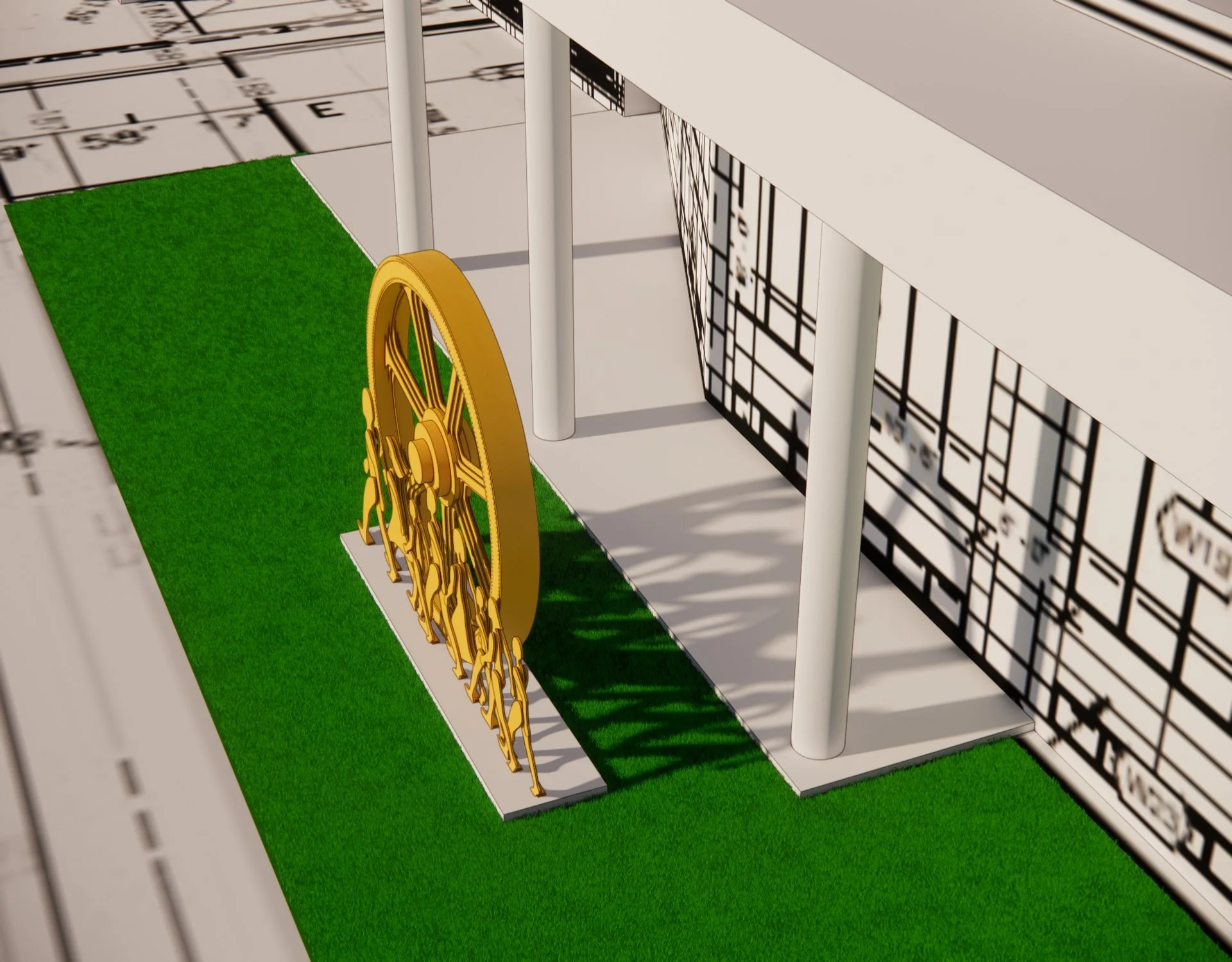
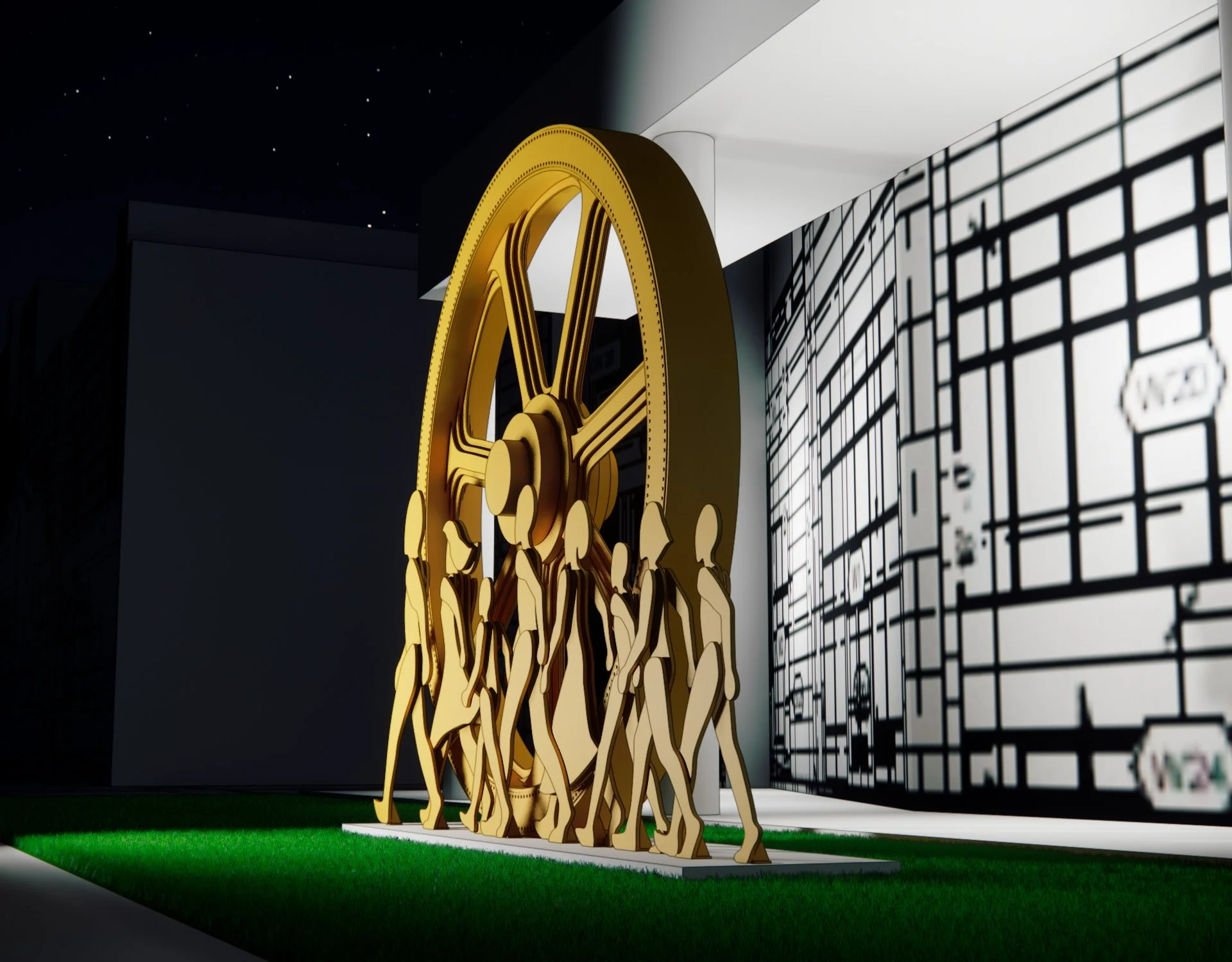
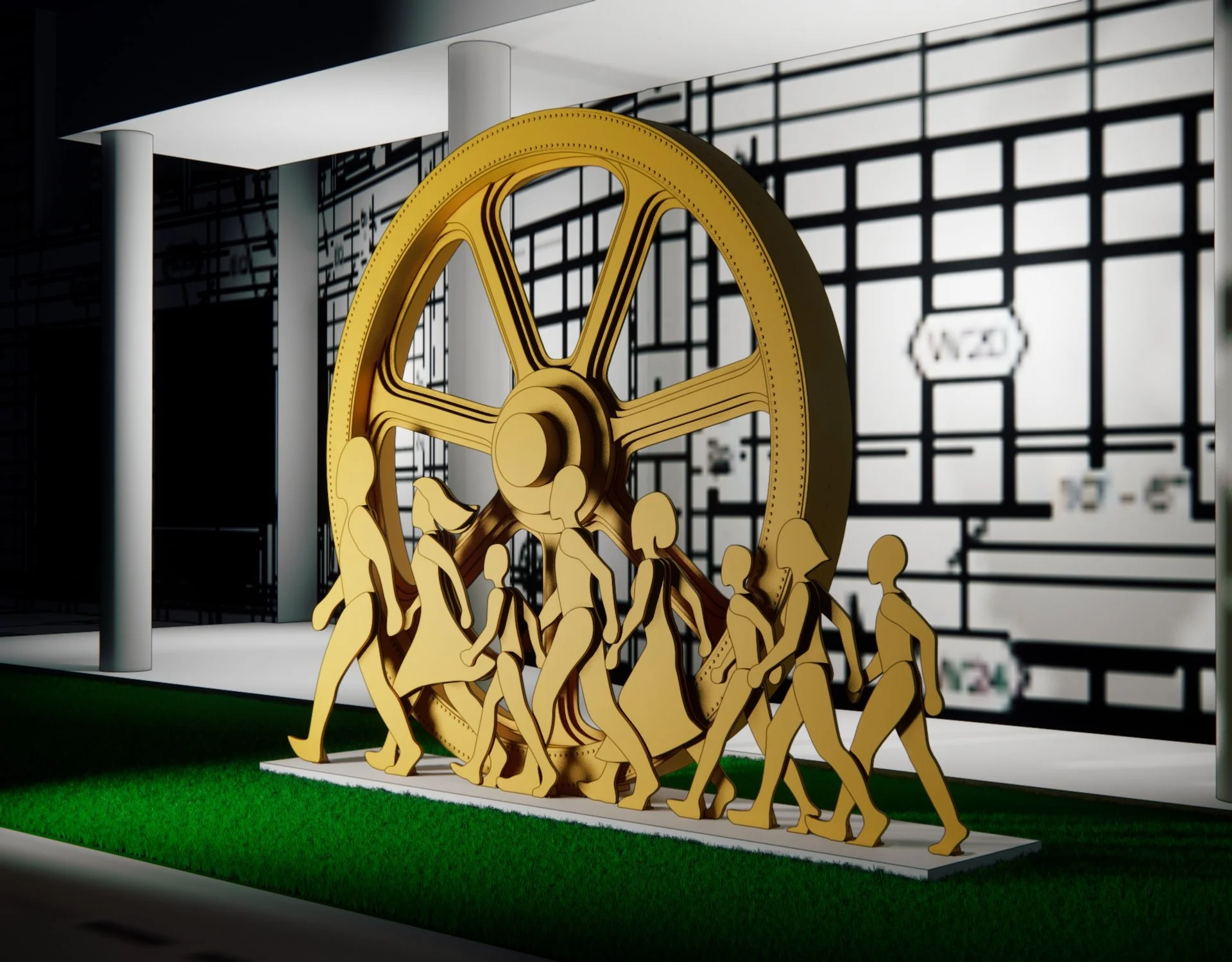
The machine is a great drive wheel, drawn from the age of iron and rivets that built this city's transit. It is not a replica of any one part. Every vehicle this building has ever held has turned on wheels: Capital Traction's electric streetcars in 1906, the buses that followed, and now Metro's first all-electric fleet. The garage began as an electric car barn and is about to become one again, and the wheel holds that whole span in a single form. It stands fifteen feet tall, pushed toward the surreal, so it reads as a memory of the machine and of how far technology has advanced. Against the clean glass of the storefront windows, it looks like something the building is remembering. Its details come from the machine shop. The heavy rim is lined with rivets, the eight spokes step back in layers, and the hub is built up in stacked collars. The wheel is built from aluminum plate in varying thicknesses: the rim, spokes, and hub are each cut to their own depth and stacked. That gives the wheel the weight and shadow of real industrial equipment.
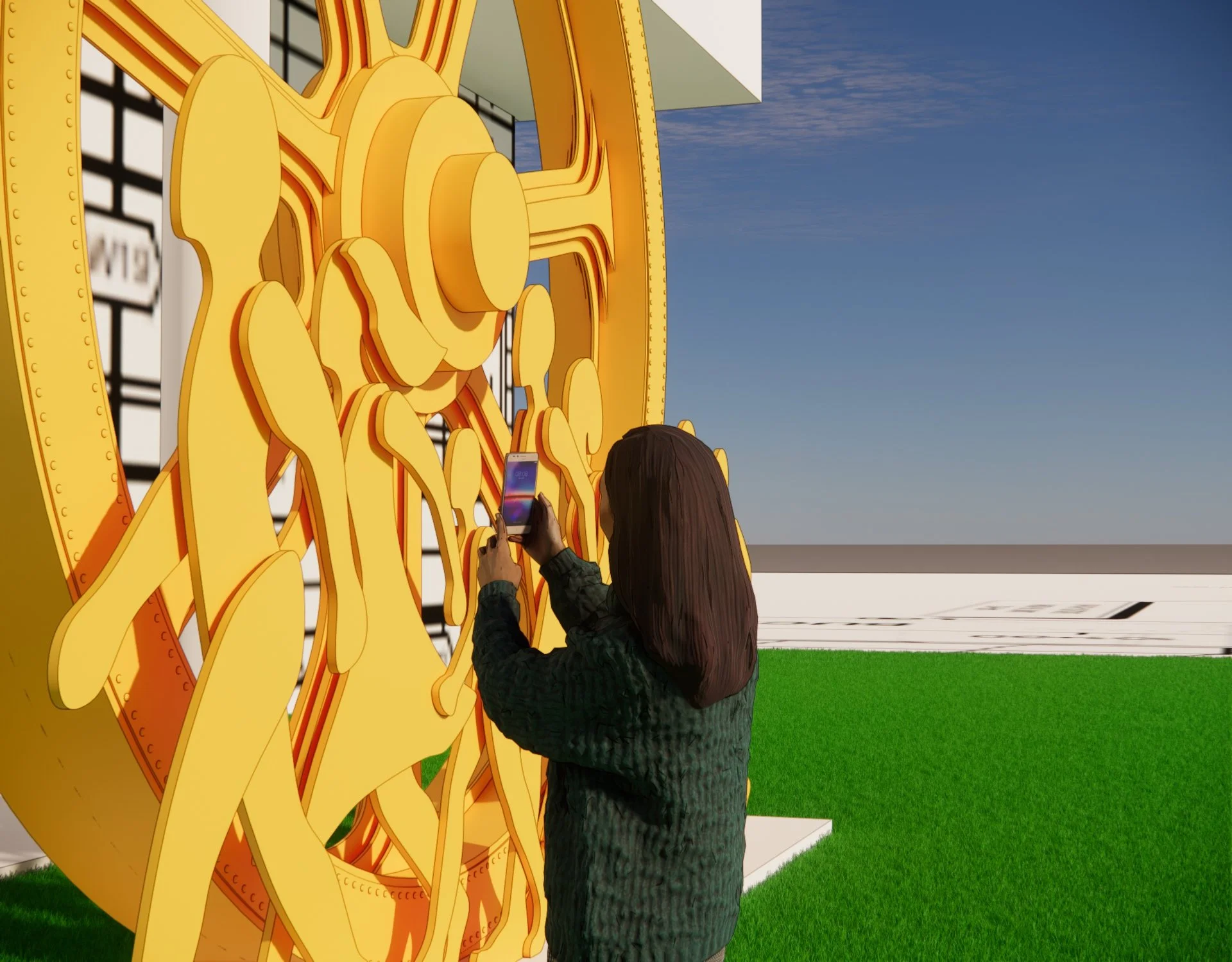
A procession of nine figures walks in front of the wheel, created in a very different hand. Their outlines come from my quick, improvised sketches, the kind I make to catch a gesture before it is gone: a long stride, an arm swinging forward, hair lifting in the wind, a child keeping pace with a parent. They are adults and children of different ages and builds, heroic in scale. Building on the poetic surrealism of the wheel, they are cut from one-inch aluminum plate as if they were cut from paper. They overlap and step through one another, a community in motion: the riders and families who have made this corridor home for generations.
The meaning of the piece lives in the meeting of those two languages. The wheel is engineered and exact. The figures are loose and human, always about to take the next step. The machinery is a metaphor for the technology and growth that made this neighborhood possible. The people made it a community.
The color is drawn from the Capital Traction Company, the line that built the original car barn on this site in 1906. Its streetcars ran in a deep golden yellow, and the sculpture takes its color from them, so the work carries a trace of the building's first life. One color across the whole piece lets the wheel and the figures read as a single form from across 14th Street. It also keeps the corner warm in every season, against green lawn in summer and gray skies in winter. The color goes on as an industrial coating of the kind used on heavy equipment and transit infrastructure. A clear anti-graffiti topcoat goes over it, so marks can be removed without harming the finish.
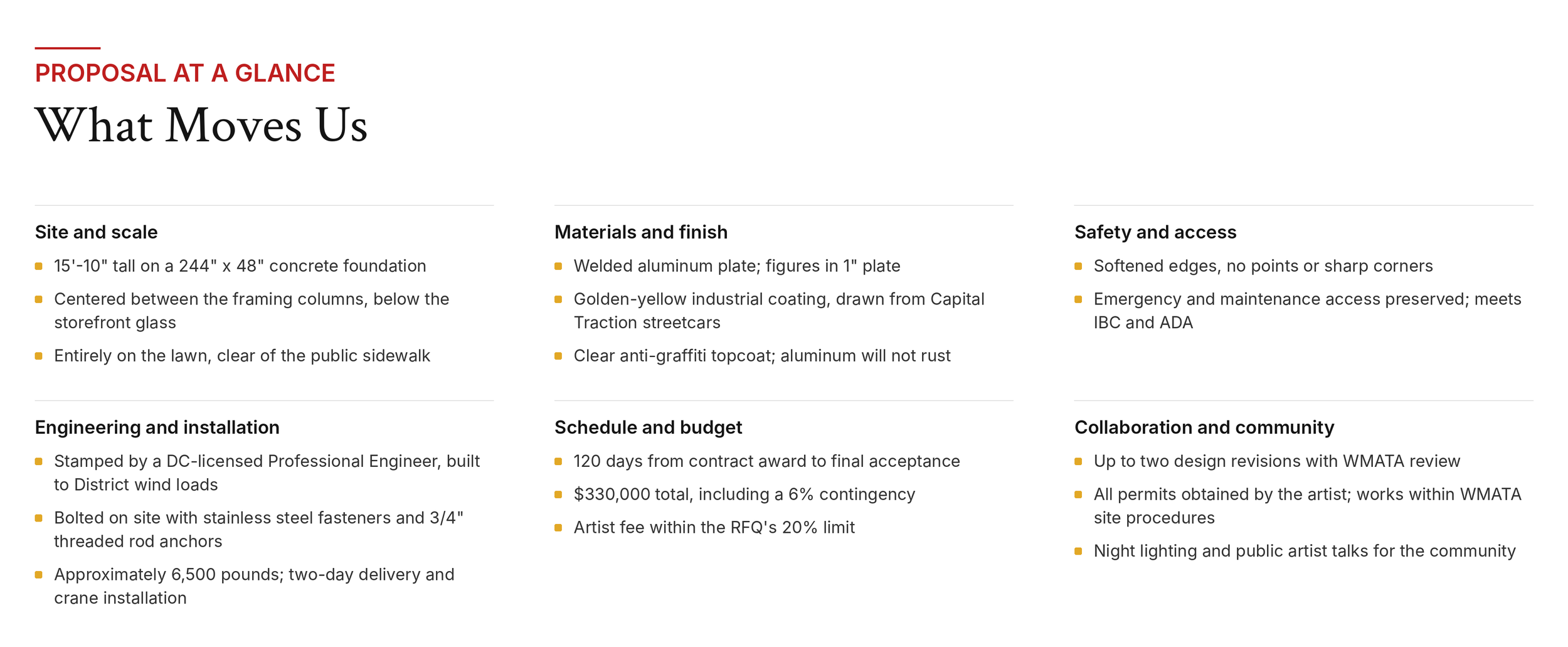
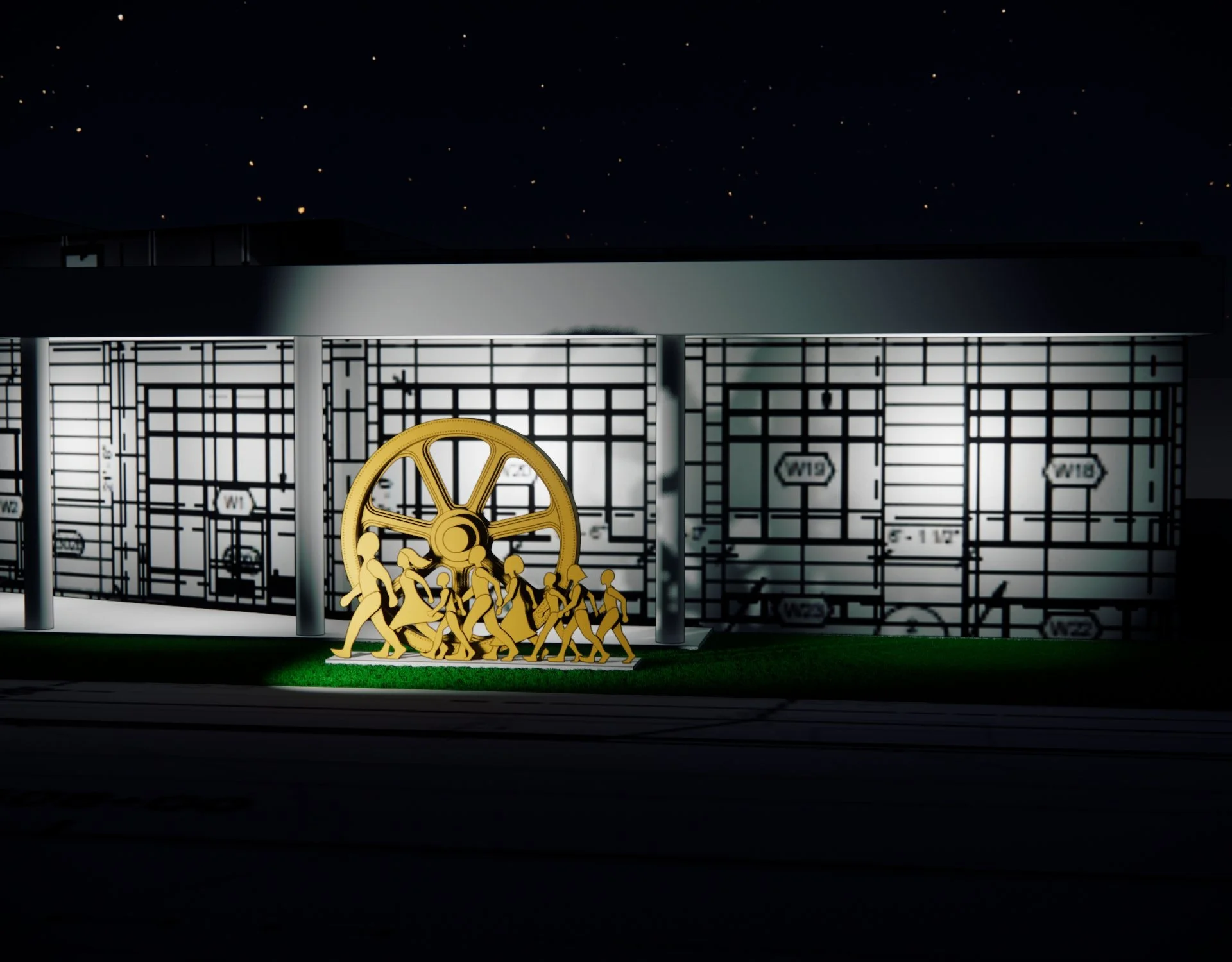
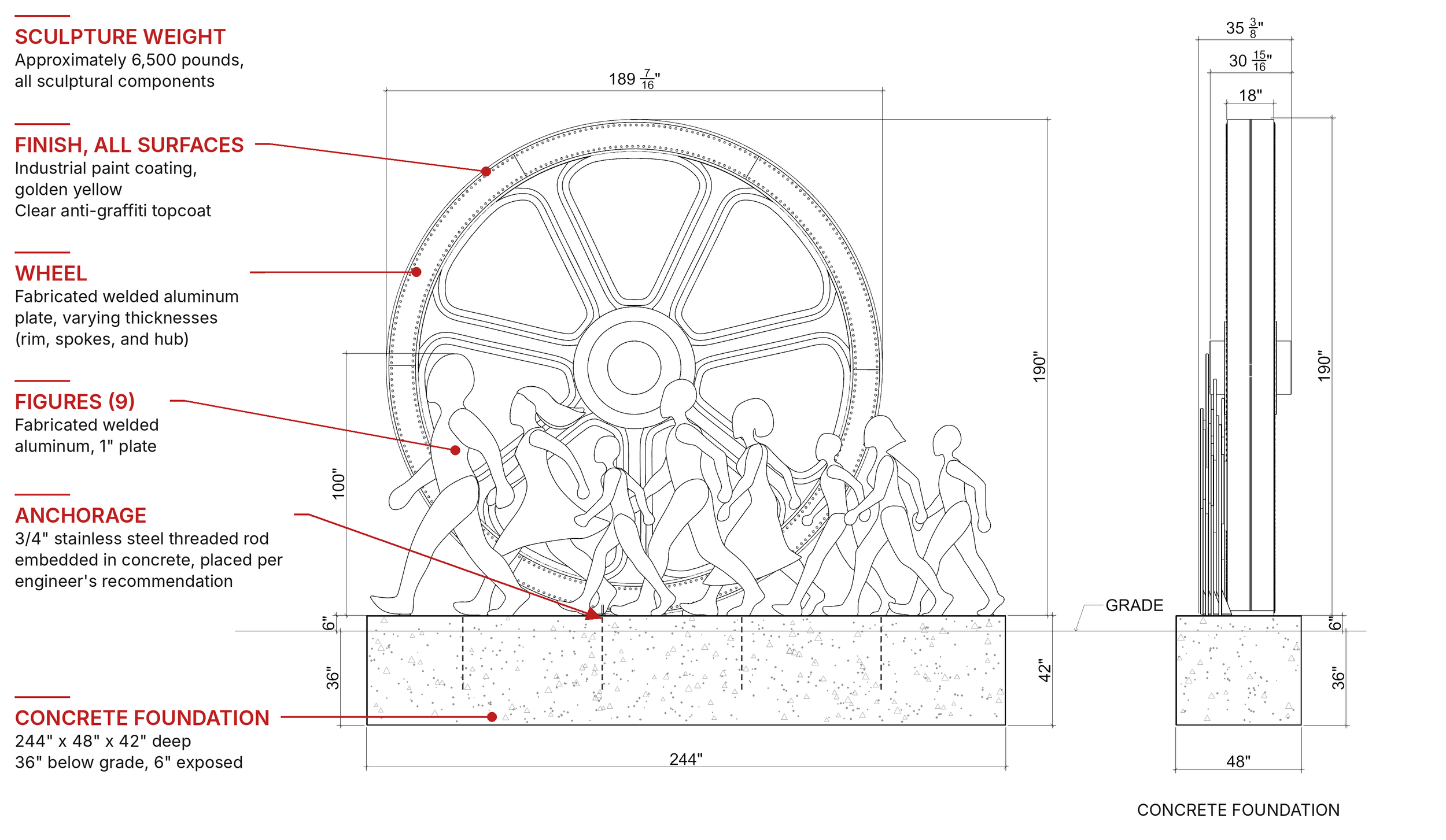
The sculpture stands on a low concrete base set into the lawn in front of the storefront windows, centered between the two framing columns. It is sized to stay below the top of the storefront glass and to sit entirely on the grass, clear of the public sidewalk. The figures stand close to the wheel and to one another, which keeps the composition shallow and closes off gaps where someone could become trapped. Every plate edge is softened, with no points or sharp corners, and the sculpture stays clear of the building entrance and the columns, preserving emergency and maintenance access to the facility. The work will meet IBC and ADA requirements.
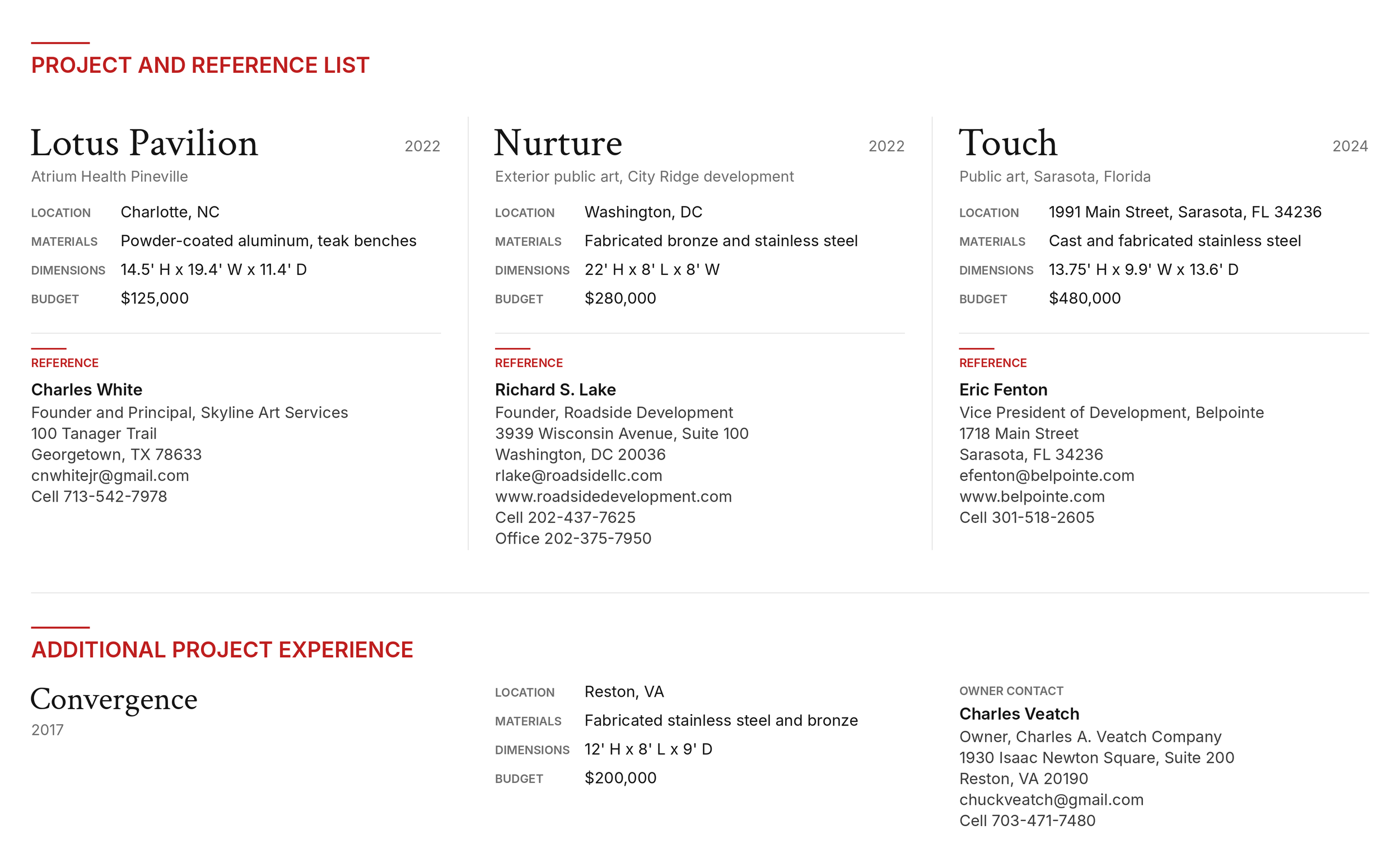
The figures are cut from one-inch aluminum plate, and the wheel combines heavier and lighter plate where the structure calls for it. Aluminum at these thicknesses gives the work real mass and presence while staying light enough for a practical foundation, and it will not rust. I know the material well: my Lotus Pavilion for Atrium Health in Charlotte, completed in 2022, is fabricated in powder-coated aluminum. Every plate is cut from the same digital model the panel sees in virtual reality. That means the piece the panel walks through at true scale is the piece that gets built, and I can study sun, shadow, and sightlines from the sidewalk before fabrication begins.
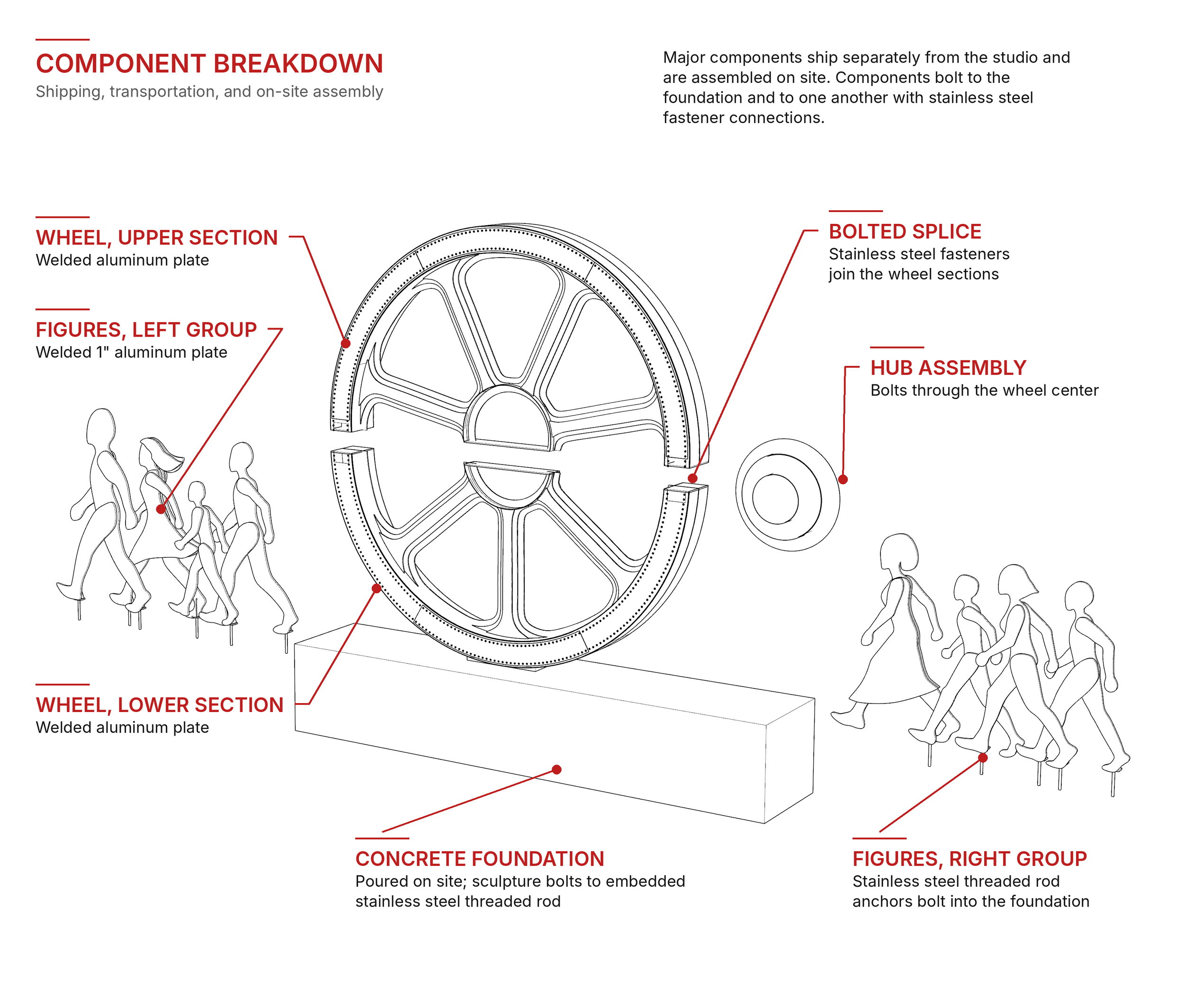
Each component is cut and welded before delivery. The wheel travels in sections with its hub, the figures in two groups, and everything is assembled on site, bolted together and to the concrete foundation with stainless steel fasteners and 3/4-inch stainless steel threaded rod embedded in the concrete, placed per the engineer's recommendation. The structure is engineered to District wind loads and stamped by a Professional Engineer licensed in the District of Columbia. The finished sculpture weighs approximately 6,500 pounds. Twenty years of running my own foundry taught me how outdoor metal ages and how to build it so it lasts. That experience goes into every connection here.
At night, low fixtures set in the lawn light the wheel and figures from below, so the sculpture keeps its color after dark. Fixtures and electrical work are included in the budget and will be coordinated with WMATA's site electrical.
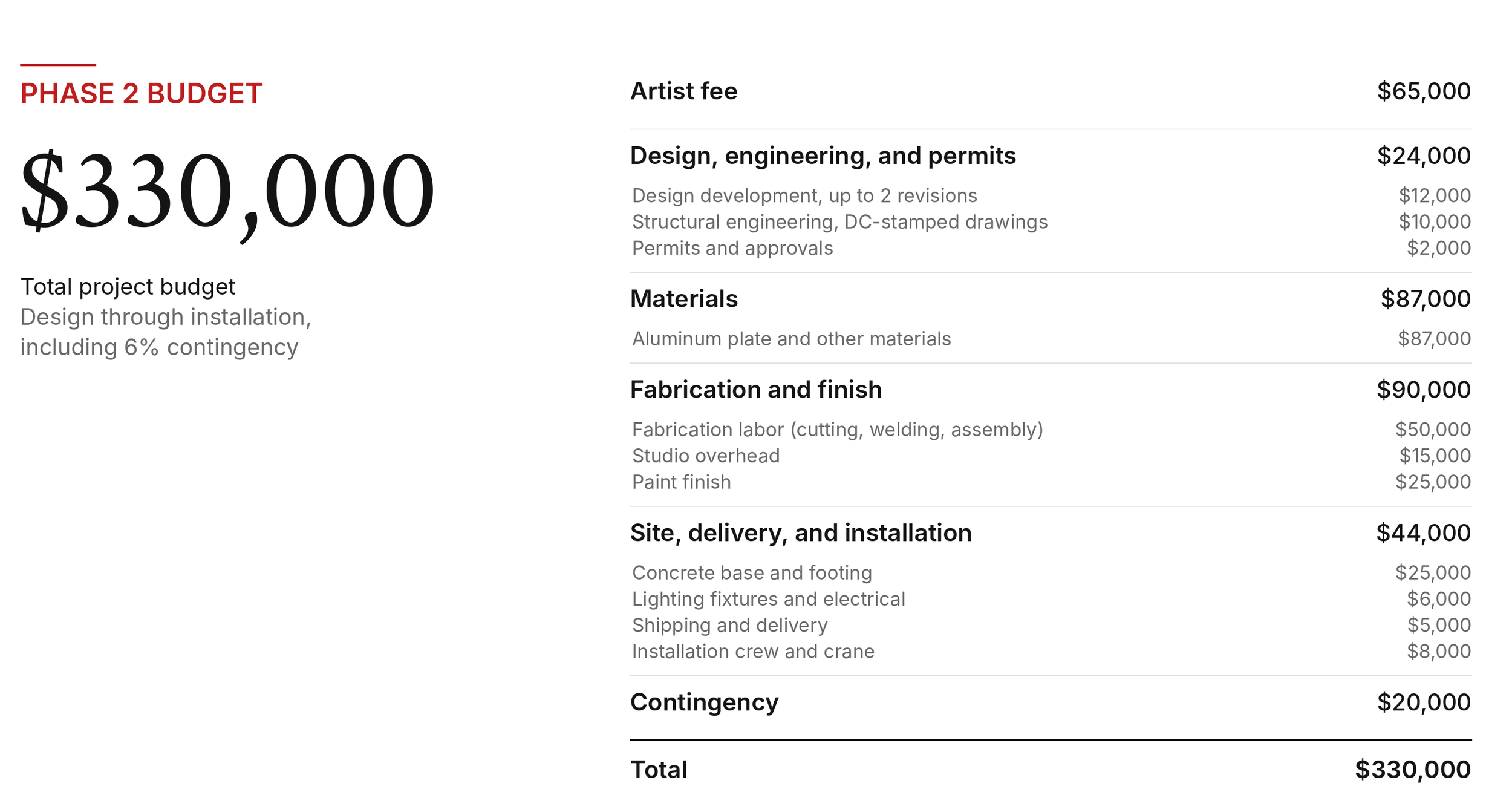
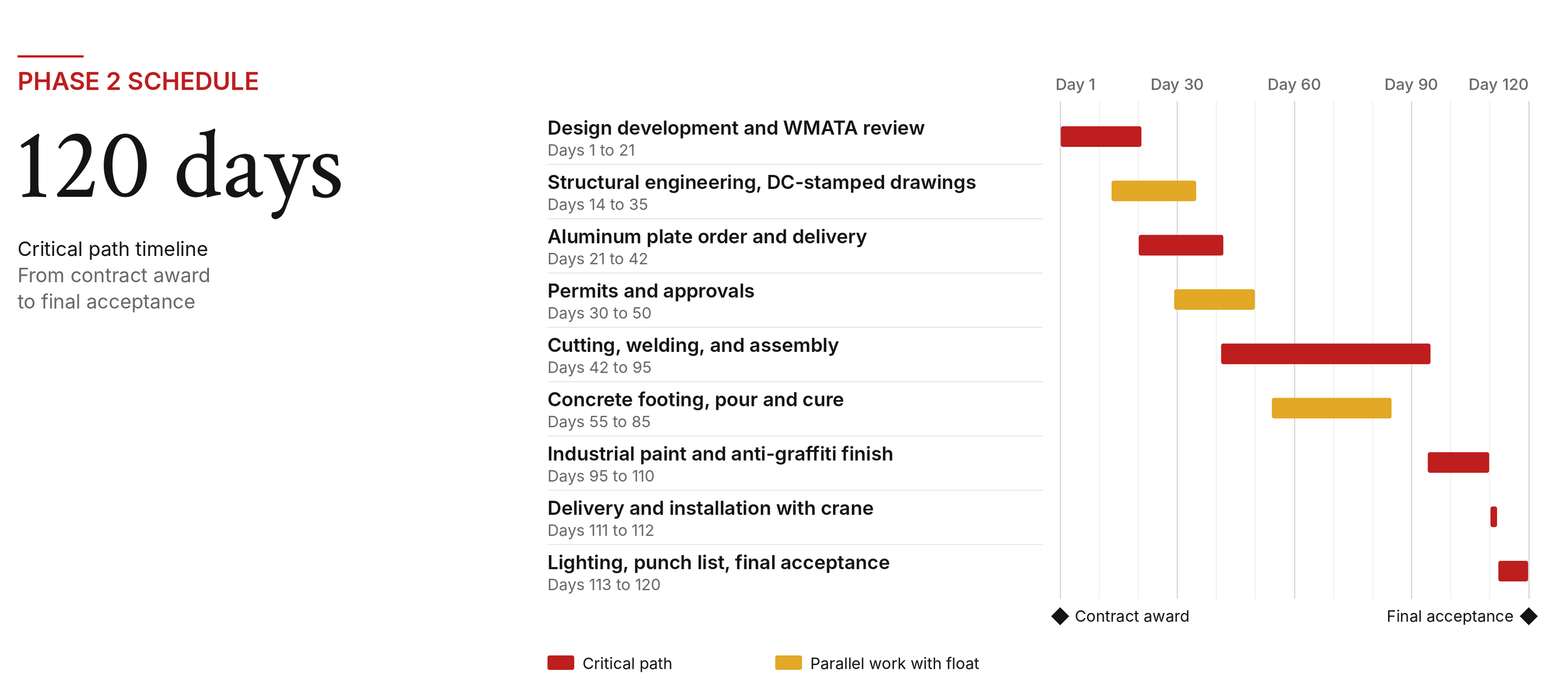
I will obtain all permits for fabrication and installation and provide approvals to WMATA before proceeding. Through design development, which includes up to two rounds of revision, I will work closely with WMATA staff, the engineer, and the contractors active at the garage, and installation will follow WMATA's site-access, safety, and security procedures. The whole project, from contract award to final acceptance, fits within the 120-day period of performance and the $330,000 budget. Delivery and crane installation take only two days. As opportunities arise during fabrication or once the sculpture is in place, I will give public artist talks for the community about the work and how it was made.
This building opened in 1906 as a home for electric streetcars, and it is about to house Metro's first all zero-emission fleet. The wheel has turned through all of it. The people are still in motion.