Wherever You May Be
In memory of Peter Duncan
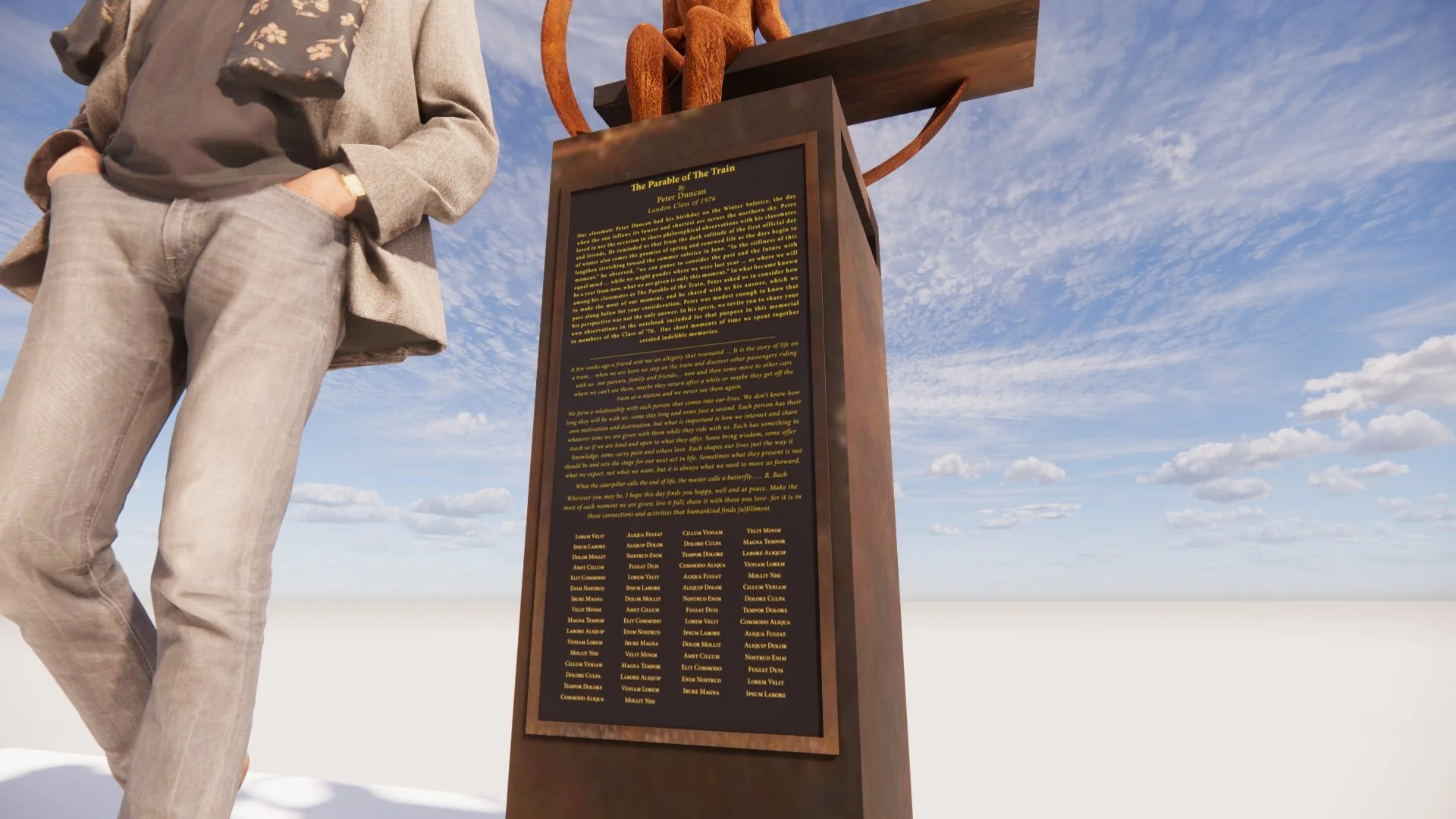
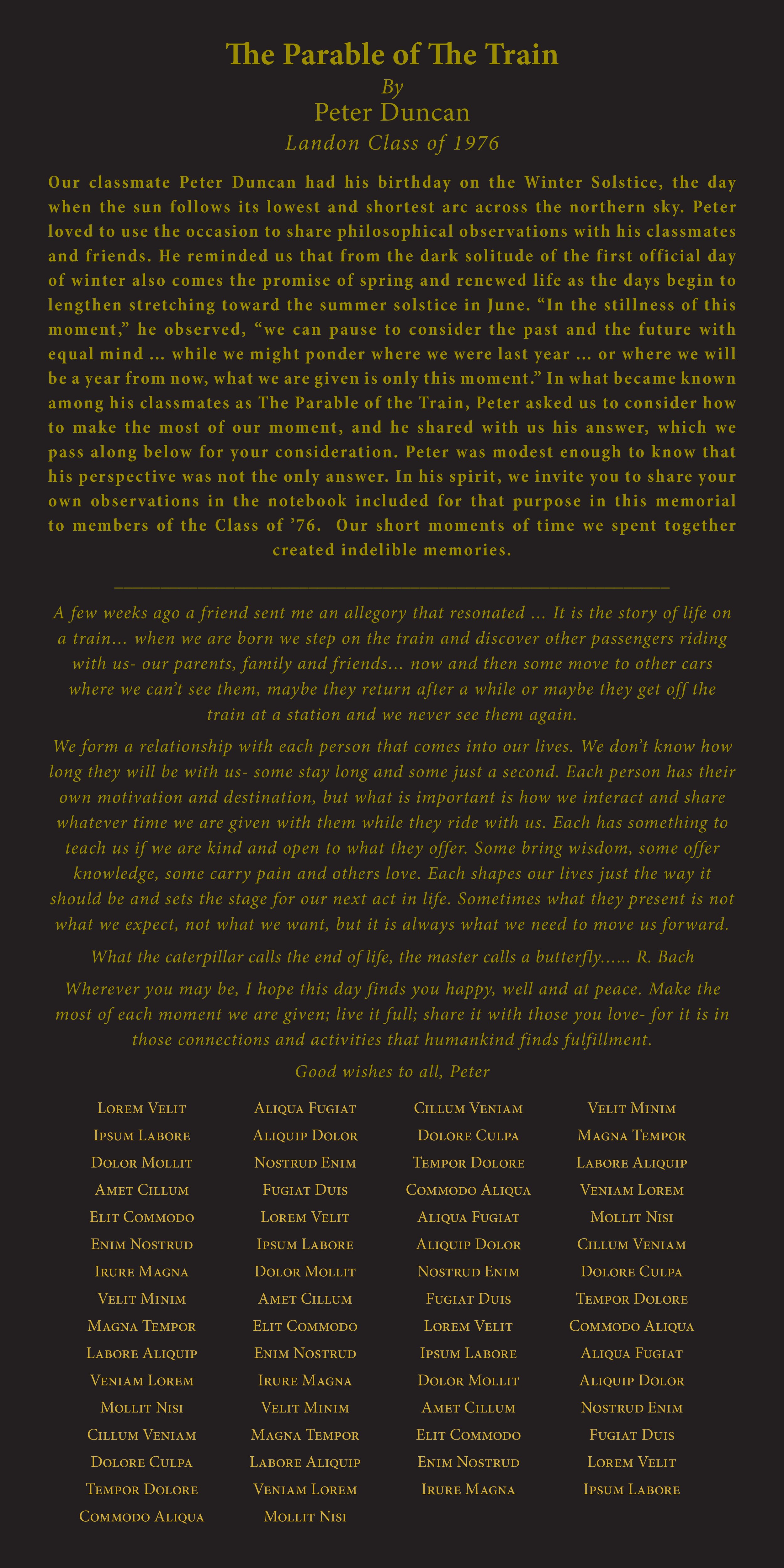
In his winter solstice letter, Peter shared a parable a friend had sent him, the story of life as a train. We board at birth and ride with whoever happens to share the car: family, friends, strangers who stay a moment or a lifetime. We do not choose them, and we do not say how long they stay. Some move on, some return, some step off at a station and are gone. What matters is not the length of the ride but how we treat one another while we share it. Each person carries something to give, and each one shapes us, even when what they bring is not what we expected. The story resonated with Peter, and he carried it forward to the people he loved.
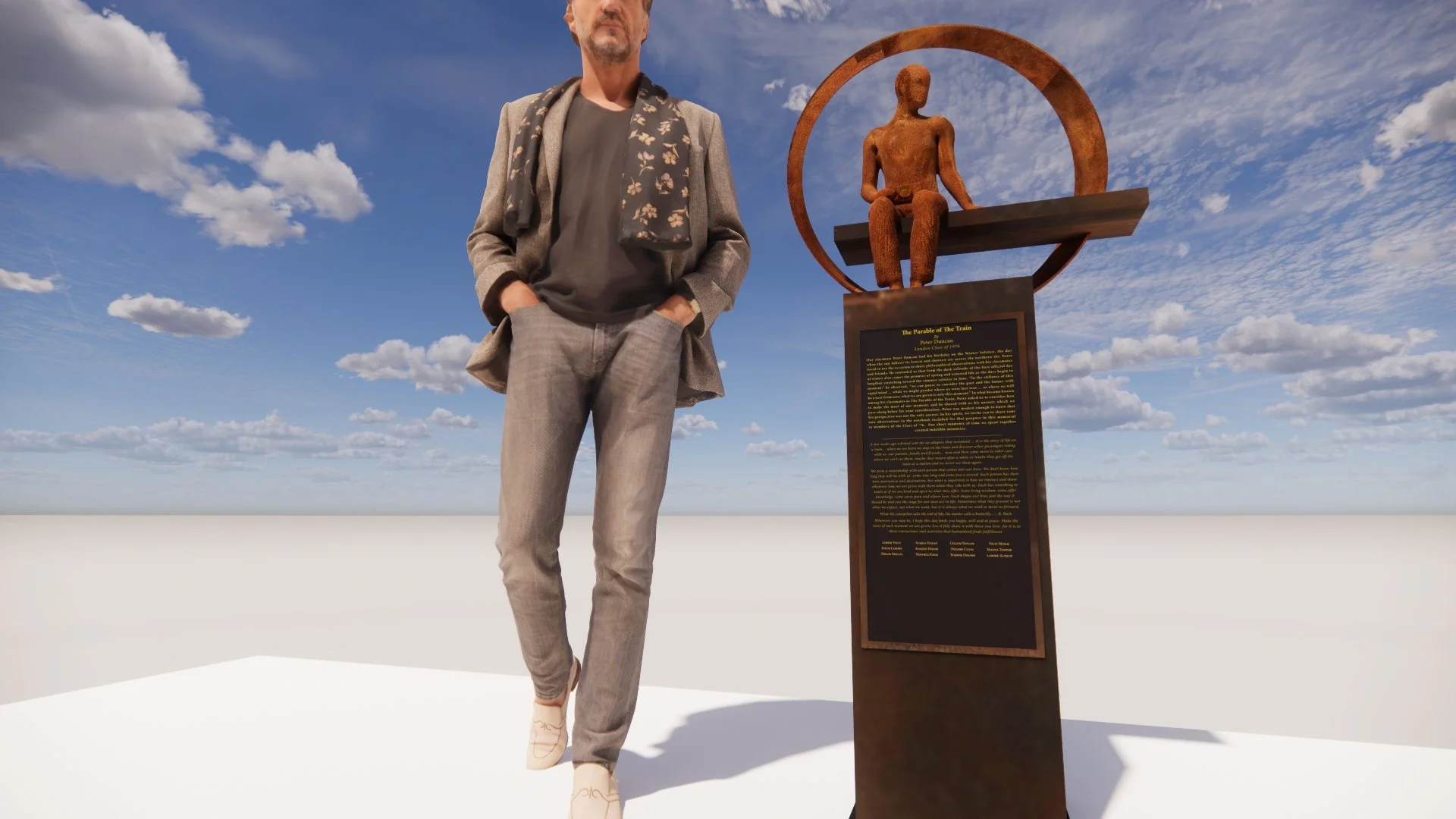
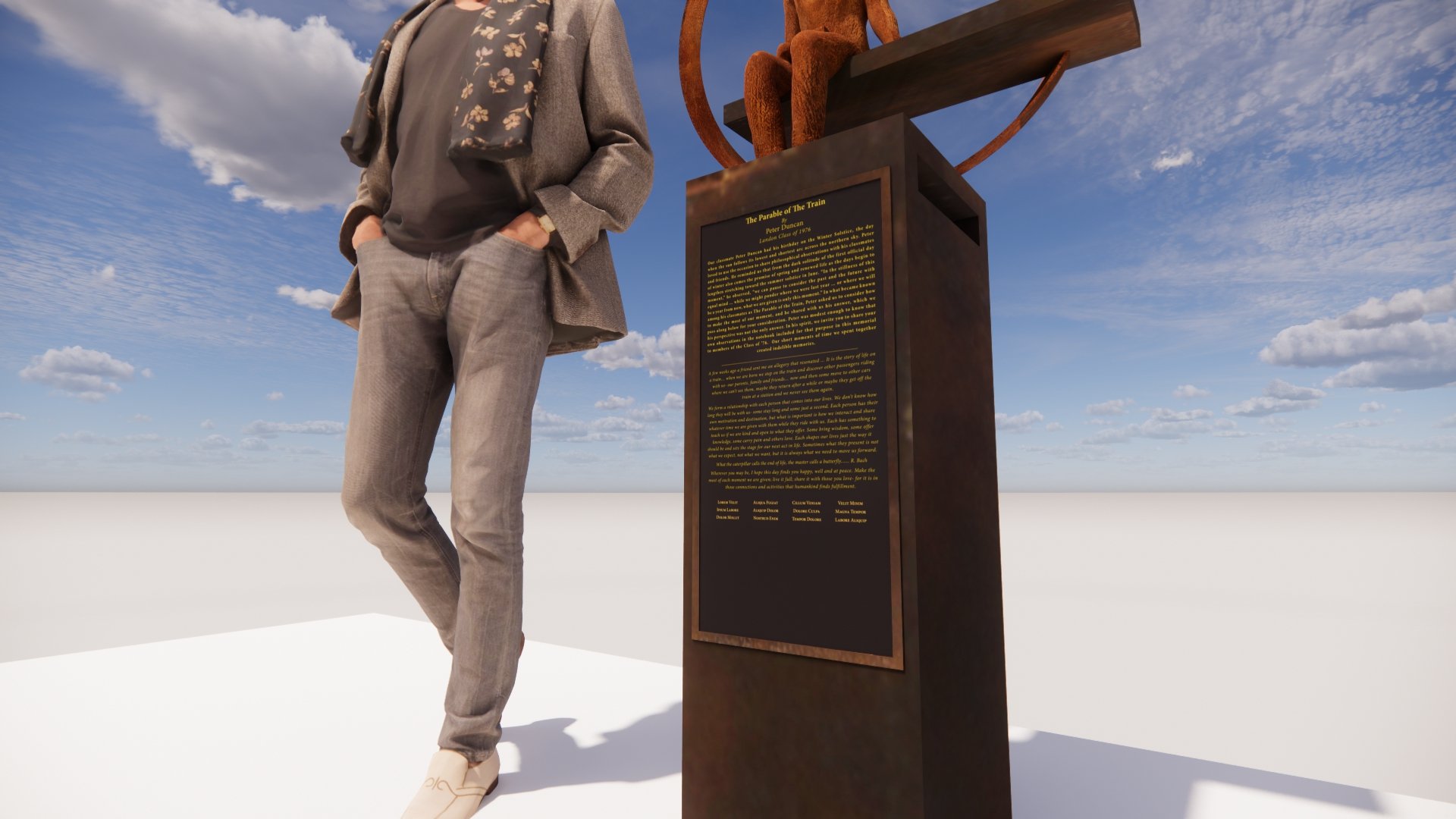
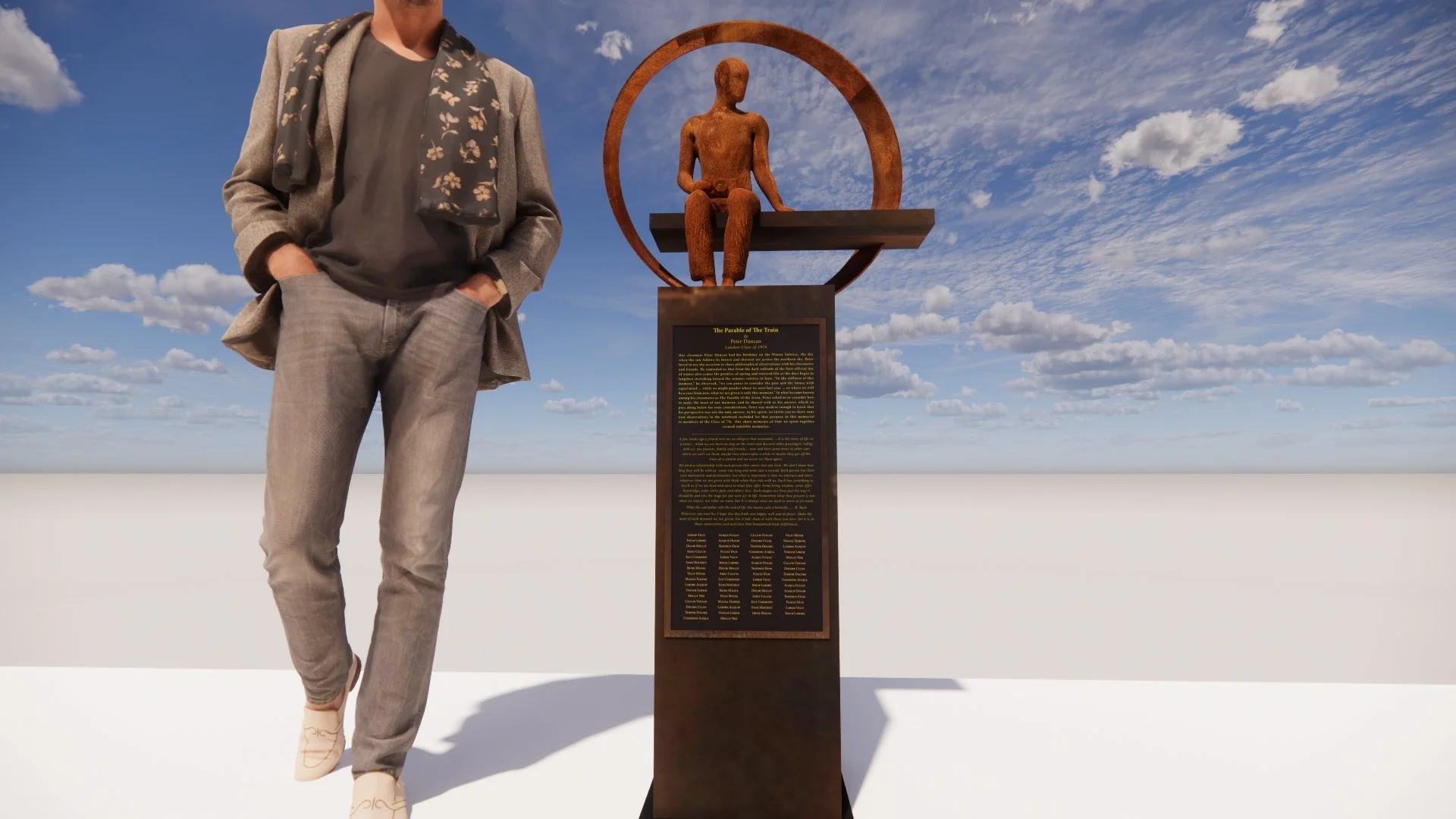
This sculpture holds that idea in a single figure seated on a plank.
Peter sits to one side. The camera rests on his lap, held in his right hand but lowered, no longer raised to his eye. For a lifetime he stood behind the lens, framing the lives of others. Here he has set the instrument down. His attention has left the viewfinder and turned toward the open space beside him, toward whoever is arriving. His left hand reaches across the open plank and rests where the next passenger will sit. The whole figure leans into a single act of welcome.
The seat beside him is left open with intention. The sculpture completes itself only when someone arrives to fill the place he has left open, and in that quiet moment the work becomes a conversation across generations, a reminder that every life is shaped by those who arrive, those who depart, and those who pause with us along the way. The reach, the turn of the head, the waiting hand all point to that one spot. Anyone who approaches will feel met rather than watched.
The circle carries the rest. Peter marked each winter solstice with a greeting, the shortest day, the bottom of the sun's arc and also the turn back toward light. The ring is that turning. It is the year, the orbit, the lap around the star he celebrated so faithfully, and the track the train follows. The plank does not cross the center. It sits low on the ring, at the line of the Tropic of Capricorn, the latitude the sun stands over at the solstice, the exact point Peter named each year. He has been seated at the turning of the light. The plank runs straight through the ring like a horizon and continues past both edges, because the line of a life reaches beyond the frame we can see.
What the caterpillar calls the end, Peter wrote, quoting Richard Bach, the master calls a butterfly.
He looked closely at others and asked us to do the same. He left a seat open. Wherever you may be, it waits for you to sit a while.